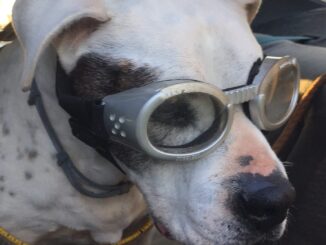

The fate of Tamborine Mountain’s black dingo, Jimbelung, remains uncertain as Traditional Custodians and wildlife advocates call for education and coexistence to be considered as an alternative to euthanasia.
Scenic Rim Regional Council previously confirmed “removal” of the dingo would mean humane euthanasia after concerns were raised about his increasing interactions with people in populated areas of the mountain.
Interaction
Council cited reports of aggressive behaviour towards teenagers and children around school facilities, interactions with people walking dogs, poultry losses and near misses with vehicles.
Councillor Amanda Hay, who stated she was not speaking on behalf of Council, said human safety should be the primary concern.
“In my opinion, human safety is the primary concern rather than the dingoes preservation – the clue is in the description ‘apex predator’,” Cr Hay said.
“If the animal stayed in the National Park, as the remainder of the pack appear to be doing, there would be no issue.
“Unfortunately, the problem animal has been fed by people which has emboldened him to the point where he displays no fear of humans.”
Cr Hay said she would rather see the dingo removed than risk a person being attacked.
“I would rather see one problem animal removed rather than bedside vigils for children or people who are attacked and disfigured as a result of an attack,” she said.
However, questions have since emerged over whether euthanasia remains under active consideration, with Tamborine Mountain News receiving information that Council personnel had separately discussed monitoring, signage, community education and a dingo information workshop.
Acting CEO James Ruprai said Council is working with residents and relevant stakeholders to reduce risks and impacts associated with dingoes while taking a balanced and responsible approach to community safety, animal welfare and biosecurity obligations.
He confirmed council is not using Sodium Fluoroacetate (1080) baits or any other Australian Pesticides and Veterinary Medicines Authority-approved baiting products or ingredients in response to the matter.
Mr Ruprai emphasised feeding, transporting, keeping, selling and releasing wild dogs or dingoes is prohibited under the Biosecurity Act 2014 and said everyone has a general biosecurity obligation to take reasonable and practical steps to manage biosecurity risks.
“Council will continue to support community members affected by dingoes, while engaging respectfully with residents who have concerns about animal welfare,” Mr Ruprai said.
Cultural significance
Wangerriburra Traditional Custodian and Wangerriburra Aboriginal Corporation director Larissa Wright said to her knowledge, Traditional Custodians had not been consulted in regard to the removal of Jimbelung.
Yugambeh and Mununjali Traditional Owner and Daggan Balun Land and Sea Ranger Coordinator Lionel Currie said dingoes held deep cultural significance for First Nations people across the region.
“The dingo is a very significant animal and totem spirit for us mob in South East Queensland,” Mr Currie said.
Mr Currie said dingo stories were connected to the creation of landscapes, including mountains, rivers and waterholes across the region.
He said education was particularly important where human development met dingo habitat and warned residents against feeding or attempting to attract the animals.
“You’re not supposed to engage with them. Respectfully harmonise and coexist with them without luring them in,” he said.
“There are not too many places in the world where you’d want to hand-feed and lure in the apex predator.”
Mr Currie acknowledged dingoes remained wild animals and could potentially bite people but said that did not mean communities could not coexist with them.
“The best way to leave them is just let them be dingoes and try not to coerce them into being, you know, like a friend,” he said.
Humane World for Animals Australia Program Manager – Policy (Wildlife) Dr Renae Charalambous said the presence of a dingo in a residential area did not automatically mean it was dangerous or aggressive.
“Habituation simply means an animal has become accustomed to people and is not the same as aggression,” she said.
“Any assessment of risk needs to consider the individual animal, the context of the interactions and what may be driving its behaviour.”
She said deliberate and unintentional feeding could cause dingoes to associate people or places with food and become less wary of approaching them.
“One of the most important things we can control is access to food,” she said.
“If a dingo repeatedly obtains food around people, it can begin to associate people or places with that reward and become less wary of approaching them.”
The Dingo Conservancy Secretary Dr Jo Samuel-King has also written an open letter to Scenic Rim Mayor and councillors urging them not to euthanise Jimbelung.
Dr Samuel-King called for public education, no-feeding signage and enforcement, safety messaging and, if required, humane hazing, a non-harmful technique to help animals keep a natural fear of humans, to be considered.
“If Jimbelung is causing no harm, then the very best course of action may be to do nothing,” she said.